
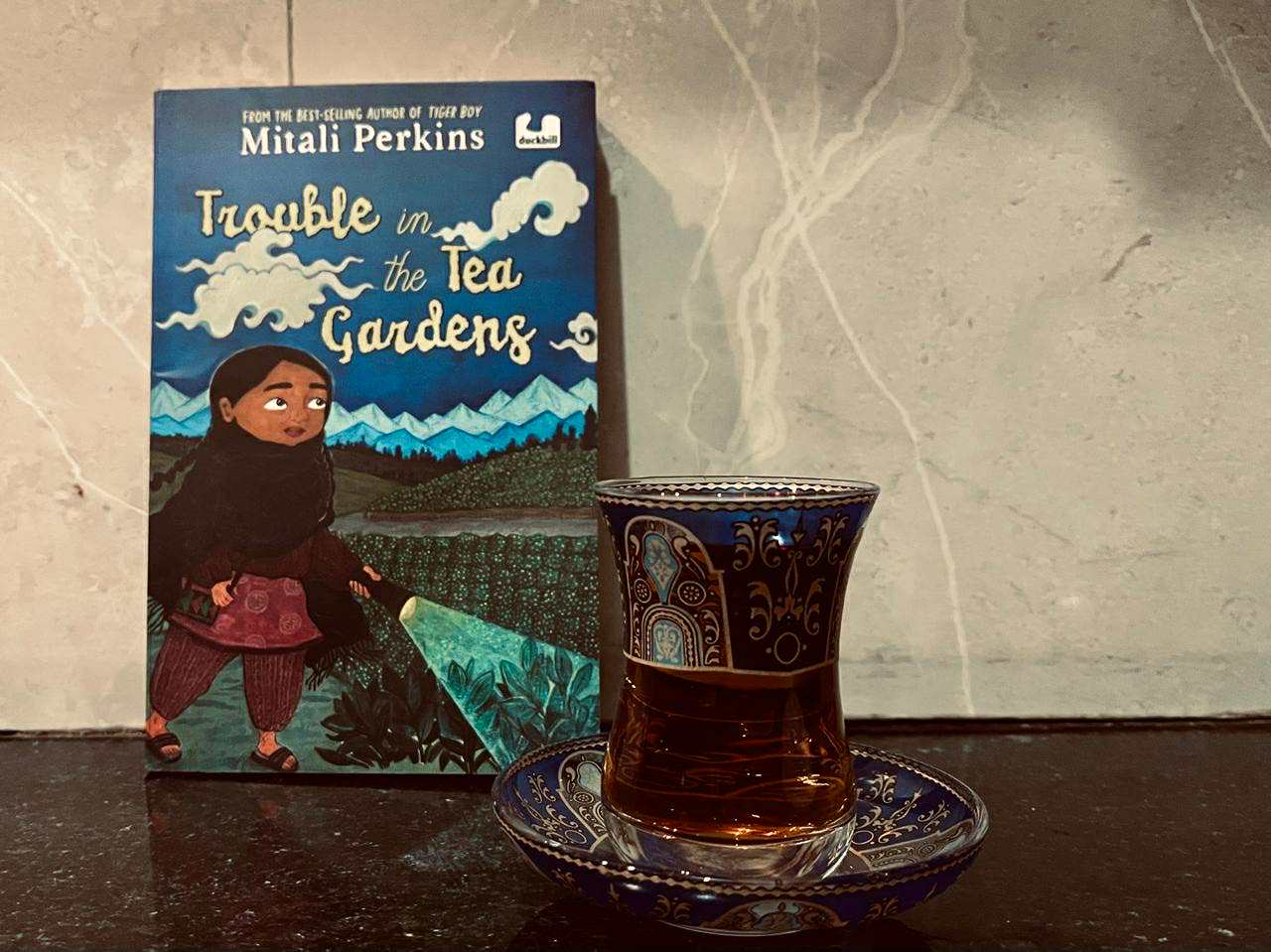
Book Name: Trouble in Tea Gardens
Author: Mitali Perkins
Publisher: Duckbill (an imprint of Penguin Random House)
Type: Paperback
Length: 152 pages
Recommended Age: 7-10 years [publisher’s recommendation is 10 years and above]
When I picked this book, I was looking forward to a simple mystery set in the hills where Darjeeling itself is an atmospheric character. What I read was a story far richer than a mystery. It became a window into the life of Sona.
Sona is a twelve-year-old Nepali girl living in Darjeeling with her mother and brother, trying to make ends meet. After her father’s death due to Covid, everything narrowed. Her mother works at a tea plantation; her brother, Samiran Daju, takes on whatever work he can find and cooks for the family when he is home. Their daily life is shaped by scarcity, illness and quiet endurance.
At the heart of the story is Sona’s hope of continuing her education. She wants to study, but good schools teach in English. She earns a scholarship, though admission hinges on an entrance test — to evaluate her English. Can she pass it?
Before that question can be answered, the narrative turns to Tara, Sona’s friend, who lives with her uncle— a tea plantation manager and loan shark. Samiran Daju owes him money and is already falling behind on payments. When Tara’s gold goes missing, she must uncover the truth—not only for her own future, but because she feared Samiran Daju, present during the time, could easily be made the scapegoat.
Sona’s desire to study is never abstract; it is grounded in blisters from long walks for potable water, the ache of hunger, and the ever-present fear of losing little stability her family has. Education here is not aspiration, but survival. The scholarship test becomes a pressure point where systemic inequality and language politics meet childhood resilience.
The shift to Tara’s story widens the moral landscape. Through her uncle, the book exposes the quiet violence of debt, power, and exploitation that governs life in the tea gardens. The missing gold is more than a plot device; it becomes a symbol of how easily the vulnerable are trapped, accused, or sacrificed to protect those in authority. We have seen this before — how easily such stories end, with blame flowing in only one direction.
The mystery thread adds urgency without overwhelming the emotional core. Sona’s nighttime investigation is tense but never puts her in any danger. Her courage is not born out of bravado or curiosity (which most Middle Grade mysteries are) but out of urgency, fear and loyalty.
I found her competence to be a little disturbing—not because it felt unrealistic, but because it felt too real. No child should have to grow up so quickly. Right from taking the agency and responsibility way beyond her years, to taking small decisions of sharing a little water that could impact their complete family. It was these ethical dilemmas that show a side of Sona that feels at once mature yet child-like and pure.
Mitali’s prose is simple and accessible, well suited to younger readers, but it does not talk down to them. It trusts its audience to grasp complexity: that adults fail, that systems are unfair, and that children often carry burdens they did not choose or should not HAVE to choose.
The Darjeeling setting—misty hills, tea estates, cold nights—is vividly rendered, grounding the story in a specific socio-cultural reality rarely seen in middle-grade fiction, though the early setup takes time to gather momentum.
Long after I finished the book, I kept thinking less about the mystery than about the ordinary exhaustion it documents so patiently.
Trouble in the Tea Gardens is a story about courage in constrained circumstances. It reminds us that heroism does not always roar; sometimes it walks miles for water, studies English behind walls, and is not afraid to ask questions. Quiet, compassionate, and socially aware, the book leaves a lingering aftertaste—like Darjeeling orange pekoe—warm, flavourful, and impossible to forget.
If you enjoyed reading this review, you might want to order the book from Amazon (kbc affiliate link),
CLICK & BUY NOW!You can find other books by Mitali Perkins here. Asha has gifted her acclaimed book Tiger Boy more than once.
Disclaimer: Mandira is part of the #kbcReviewerSquad and received this book as a review copy from the publisher via kbc. She is the author of the award winning book Children of the Hidden Land. Her new release Muniya’s Quest for middle graders has been reviewed here with high praise and lots of love!